First, imagine beingthe youngest player ever to appear in a English Premiership match. Good. Now imagine being only the eight Englishman to break the 100-cap barrier for England rugby. And yet—somehow—rarely being the name the wider public reaches for.
You just became George Ford: one of the sharpest England fly-halves and one of the sharpest game managers of our era.
- Early life & rise
- Coach Bortolami’s view: perfectionism and leadership
- The All Blacks swing (2024–2025)
This article is also available in italiano and (soon) in español
Early life & rise
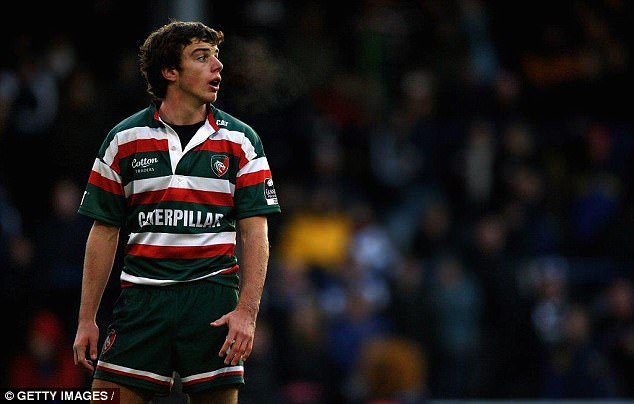
George Ford was born on 16 March 1993, son of a former Rugby League player and coach. League is where he first fell in love with the oval ball, playing until the age of 11. Then came the switch to Rugby Union at Rishworth School, before—at just 16—signing his first professional contract with the Leicester Tigers.
The talent was clear from the start. Ford wore England colours from the age of 15 (at Under-18 level), and with England U20 he played 11 matches, scoring an eye-watering 143 points. At youth level, he was a genuine cheat code.
On 8 November 2009, aged 16 years and 237 days, Ford became the youngest Rugby Union player to make a professional debut, turning out for Leicester in the Anglo-Welsh Cup before he’d even played U20 rugby. Fate added a perfect subplot: opposite him at fly-half was his older brother Joe Ford, who would go on to a solid career across the Premiership and the Championship—England’s first and second professional tiers.
Club career (Bath rugby, Leicester Tigers, Sale Sharks)
A year later, on 27 November 2010, Ford made his Premiership debut off the bench in a comfortable Tigers win over the Newcastle Falcons. But it was the following season when he truly broke out. In September 2011, he earned his first start—setting another record as the youngest Premiership player to start at fly-half. A brief loan spell at Leeds followed, then back to Leicester, where in January 2012 he debuted in the Heineken Cup, scoring his first try for the club in a win over the Aironi.
Two months later came his first silverware: Ford steered Leicester to the Anglo-Welsh Cup title, beating Bath in the semi-final and Northampton in the final. When the Premiership reached the business end, he logged serious minutes in the semi-final win over Saracens, scoring 14 points and earning a start in the final. It wasn’t enough, though. Despite those 14 points, Leicester fell to the Harlequins, who that year claimed their first league title.
The following season, even with a future move to Bath already agreed, Ford played a key role in Leicester’s march to a tenth Premiership title. He made a major impact in the final too, forced on early after Toby Flood was injured, and scoring 12 points in the 37–17 win over Northampton.
Then came four seasons at Bath, all at an elite level. As the undroppable starter, Ford dragged the team forward on points and performances, reaching a Challenge Cup final and a Premiership final—both lost, painfully, at the last step. In 2017, he returned to Leicester after 90 appearances for Bath (82 starts), having scored 960 points. Amazing numbers.
Home sweet home
Back at Leicester, Ford maintained an excellent standard, even if the club couldn’t quite reclaim its old dominance—at least not until Steve Borthwick arrived as head coach. Under Borthwick, Leicester reached the EPCR Challenge Cup final in 2021, then won the Gallagher Premiership in 2022—a triumph with a bittersweet edge, because Ford went down injured in the 23rd minute of the final. And this wasn’t a minor knock. It was an Achilles tendon rupture. Seven months out. A delayed start to his new chapter with the Sale Sharks.
The comeback was gradual: 40 minutes as a starter in the Premiership Rugby Cup, then half an hour off the bench in the league against Northampton Saints. From there, Sale Sharks’s control room had one name on the door: George Ford. A late surge—three straight league wins—secured a playoff spot. Sale went all the way to the Twickenham final, after beating Leicester in the semi-final.
The last chapter against Saracens, however, didn’t go to script. Sale had to hand the crown to the Londoners.
The next season was defined—above all—by Ford’s return to the international stage with England: first in the Summer Nations Series , then at the Rugby World Cup 2023. He wasn’t the undisputed headline act there, partly because Owen Farrell was in better form, and because Borthwick’s game model was still developing—leaning toward the more square, more direct structure that suits Faz. Still, Ford played in six of England’s seven matches, starting three of the four pool games. His tournament highlight came against the Pumas—his first England start since March 2021—when he landed three drop goals and scored all 27 of England’s points, keeping Argentina in check despite England playing a man down.
At club level, he never gave up the 10 shirt: always starting, always steering, taking Sale Sharks to a Premiership rugby semi-final. His form was trending back up—and with Farrell leaving for Paris (to Racing 92) Ford started every match of the Six Nations 2024 for England. It wasn’t a disastrous campaign, but it wasn’t a success either: narrow wins over Italy in Rome (24-27), Wales and Ireland (with the Ireland result the only one that truly stood out), and defeats to Scotland and France. Borthwick’s England were starting to show a shape, but still looked a touch mechanical, sparks visible, the fire not yet fully lit.
The rise of Fin Smith—we also covered him in another piece—and lingering quad issues kept Ford mostly on the outside during the Six Nations 2025, with just one bench appearance against Wales. But his club form (another Gallagher Premiership semi-final with Sale) put him back in contention, and he reclaimed the starting shirt for the summer Tests—leading England to three wins from three, including two away victories over the Pumas.
Before we talk about the present, let’s get under the hood of the player—helped by the invaluable perspective of someone who’s seeing him up close every day: Marco Bortolami, Sale Sharks head coach for the first part of the 2025/2026 season.
Coach Bortolami’s view: perfectionism and leadership
Even in his eyes, George Ford isn’t just another fly-half. As we said at the start, he isn’t the kind of No.10 who makes eyes pop with a sidestep, a dummy, or a highlight-reel trick. Ford is the kind of player where the less you notice him, the more it usually means everything is going exactly to plan.
He is the prototype English playmaker: structured, tactical, strategic—built for pressure and the slow grind. And Ford thrives there, reading situations early and shaping both opposition defence and his own attack to fit the game plan and the moment. That anticipation, paired with elite execution, took him to the top of English rugby fast—and kept him there for more than a decade.
“For English rugby, for the English league, he’s the perfect product. Having played rugby league gives him a varied background. And then—he has an incredible understanding of every situation.”
His most intense duel came with Owen Farrell—fly-half or inside centre, hugely talented and even more “square” than Ford. They often played together, particularly during Eddie Jones’ tenure as England head coach from 2015 to 2022.
More recently, the biggest challenges—helped along by a few too many injuries—have arrived with the rise of Marcus Smith first, then Fin Smith. Two younger fly-halves with a stronger instinct to take on the line themselves. Both are outstanding at exploiting space directly, attacking defensive seams with the ball in hand—helped by physical traits that suit that style. Ford, by contrast, prefers to put others on the front foot: with his passing, or with his kicking game. It makes him less “obvious” to the casual eye.
“Many labelled him as no longer up to international standard. Few predictions have aged worse.“
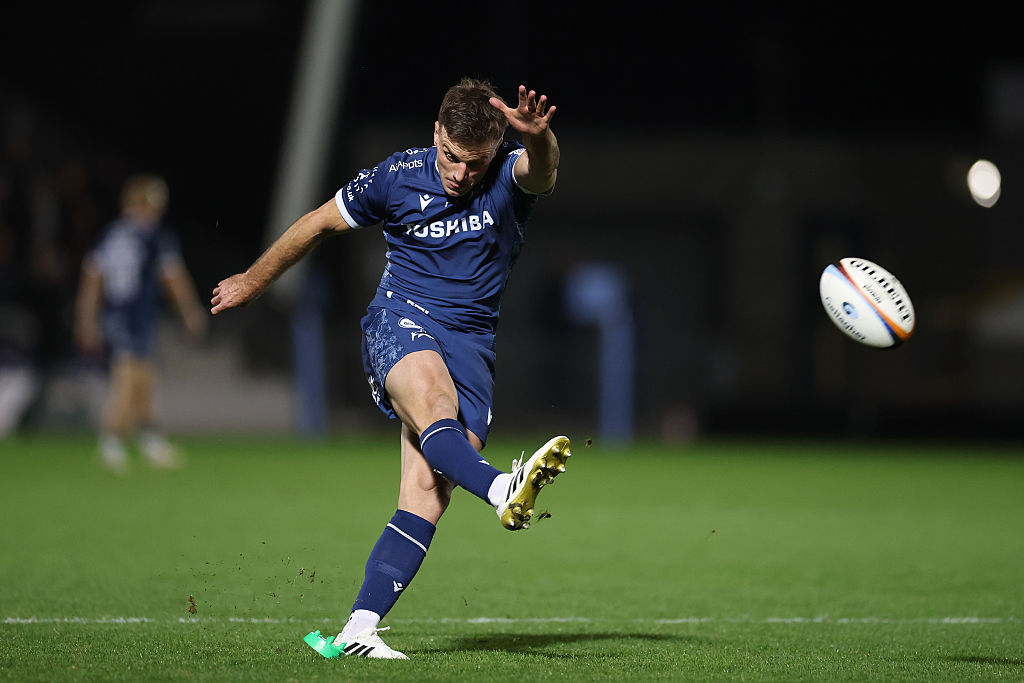
If one Ford skill does grab the crowd, it’s his kicking. With exquisite feel, he keeps his team moving forward—and he hasn’t forgotten one of his signature weapons: the drop goal, the bounce-kick worth three points when it sails between the uprights. It’s a spectacular skill, recently revived by specialists, often used after restarts and dropouts to take points when the game locks up—just as Ford did against the Pumas at Rugby World Cup 2023.
Another Ford masterpiece—one he truly owns, and few can replicate—is the so-called spiral bomb. It’s an up-and-under launched high, but with added spin that makes its drop unpredictable for the defence. It’s used to keep the team on the front foot when carrying doesn’t bring the desired results. The aim: force a knock-on, or regain possession off the bounce, then exploit broken-field chaos with defenders retreating.
Putting your team on the front foot is every fly-half’s job—but everyone does it differently. Ford has several ways, but his best work comes from playing right on the defensive line, spotting chances his game understanding lets him see earlier and clearer than anyone else—sending teammates into gaps they often didn’t even know were there. That can cut both ways. Sometimes teammates don’t see what he sees, and he can end up putting them under pressure if no option is wide open—or at least, no option that everyone else recognises.
“We’ve thought a lot about his ability to adjust depending on the situation, the players around him, and what the moment demands. Even experienced players ultimately need to be challenged, to keep thinking about the dynamics of the game.”
And this is exactly where Ford is confirming what he is: a champion. Because rugby itself is shifting quickly, and staying at the top means changing with it.
“The energy, intent and dedication he brings to every single session—that’s something you only see in the very best. And he is one of the very best. That’s why he’s stayed at the top for so many years and reached the milestone of 100-plus England caps. There isn’t a day when he doesn’t step onto the field to improve—and to demand 100% from the players around him. In that sense, he’s a ruthless leader. And that’s another mark of the elite.”
Ford’s one weakness—highlighted by Bortolami—is physical size. He’s a smaller player, and that, combined with a refusal to shy away, has led to multiple injuries; it also makes life harder under the high ball. But it doesn’t change the bigger truth:“I haven’t coached anyone like him, with his characteristics. Honestly, I don’t even remember playing with a No.10 so solid, so consistent, so demanding and so structured—both in how he approaches matches and in the determination he brings every day, driven by his passion for the game.”
The All Blacks swing (2024–2025)
It’s Saturday 2 November 2024. In London, a kickable penalty and a makeable drop goal separate England from a longed-for home win over the All Blacks. Both are missed by George Ford. Instantly, the knives are out—English media can be merciless, sparing no one, and not always stopping to check their own conscience either.
Fast forward to the 15 November 2025. England don’t just beat the All Blacks at home—they blow them away, in the cathedral of rugby. A match that feels like a full rebirth for English rugby and for Ford himself.
It wasn’t easy. New Zealand started like lightning: two tries in five minutes—between the 13th and 18th—turning it into 0–12. Then the match flipped into a game-management masterclass, conducted by “Professor” George Ford: he slowed the tempo, played in the right areas, squeezed them with territory and pressure, and dragged England back into control one decision at a time.
Up to that point, the All Blacks defence had been effective. England needed another route to progress. Ford went to his toolkit: a spiral bomb, Freddie Steward chasing, and a slap-back that gains 30 metres and creates a fast ruck—exactly the kind of ball that lets you stress a defensive line. A rushed decision from Mitchell to keep going the same way blunted the momentum, and after a couple of slower phases Mitchell launched a slightly overcooked box kick. Jordan called the mark.
From the restart, Ford fielded the ball—and again fired a spiral bomb with Steward hunting. Again England won it back, Pepper collecting just outside the All Blacks’ 22. Next, Steward grubbered in behind, pinning New Zealand with a lineout five metres from their own line—an escape they handled well.
Then came the key shift: after conditioning the All Blacks defence through three consecutive sequences—forcing an extra man to drop into the backfield—it was time to attack. Roigard kicked. Mitchell gathered, moved to Ford, and Ford didn’t hesitate: the ball went wide to Ben Earl to exploit a clear 5-on-4. Earl punched in and offloaded beautifully to Marcus Smith, who was only stopped ten metres out. Quick ruck—Ford had already seen it—pop pass inside to Sam Underhill, who released Emmanuel Feyi-Waboso to within three metres of the line. England were held up on the next phase.
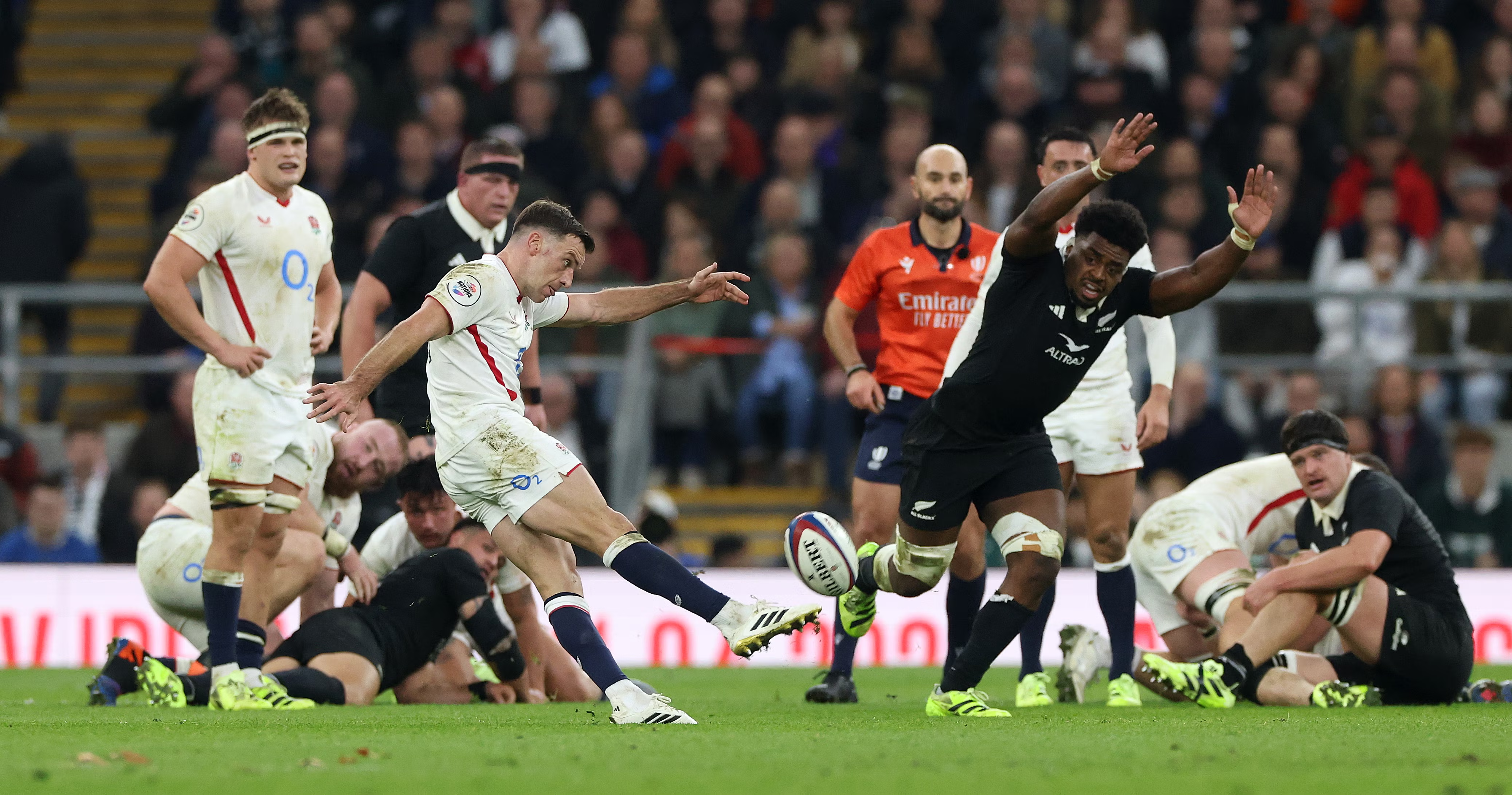
The All Blacks siege had turned into a momentum swing, engineered by Ford, who shaped New Zealand’s defence to create chances for teammates. Soon after, Ford produced a superb assist under pressure for Ollie Lawrence, who beat two defenders and scored the try that sparked the comeback: 5–12.
Then came the moments that make rugby people grin. 38th minute. Fourteen minutes with the scoreboard frozen. England need points before half-time. They won an attacking lineout just outside the All Blacks’ 22. After six phases for barely six metres, it’s time to cash in. From the third phase onward, Ford is organising everything to build the best platform for a drop goal. At the right moment—after a carry that gets them over the gainline and with the defence not at maximum pressure—he calls the pass to Mitchell and drills the drop goal: 8–12.
Restart. Mitchell box-kicks. England recover. A wide shift finds Feyi Waboso, who carries up to the New Zealand own 22 metres. With England on the front foot, Ford tries to speed things up through the forwards, but the All Blacks hold firm. So he builds for another drop: three phases, the last with the defence retreating slightly, then the ball is set perfectly for Ford. 40th minute: 11–12. Game on. From there, momentum belonged to England. The All Blacks scored just one try in the second half; England piled on 22 points. In 22 minutes, Ford changed the course of the match. In 12 months, he changed the outcome of this fixture—and maybe the story of his career. Because after the 2024 match, many labelled him as no longer up to international standard, as if that night should have closed his England chapter for good. Few predictions have aged worse.
Ford didn’t just reclaim England’s No.10 shirt—he was named Player of the Match, added a try to the performance, and delivered a reminder of what he really is: the kind of player most people only notice when he misses… or when he bangs over two drops in three minutes and scores. They don’t notice the work between those moments. They don’t notice how he bends the game to his will. Let them carry on. George Ford is for the few—just like what he does out there. In fact, nobody else does it at all.
Carborugby is a project shared by a group of passionate fans who aim to create content across blogs, social media, fantasy rugby, and podcasts. If you like our work and want to support the project, you can share our articles and post or buying us a coffee at the link coff.ee/carborugby. We are also translating our articles into English and Spanish to connect with rugby fans all around the world.

 carborugby.com